Reagent Kit Information
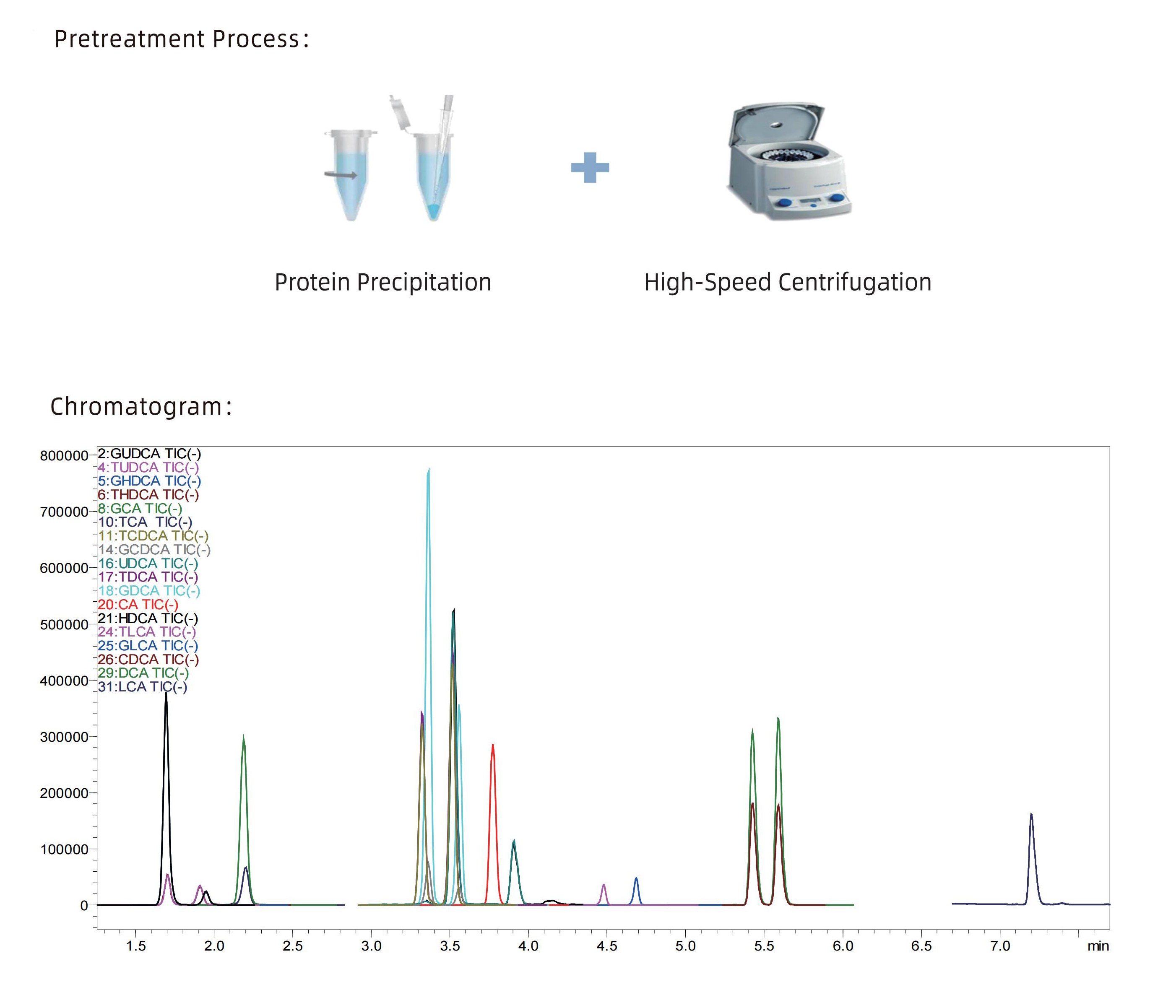
Detection Method: Liquid Chromatography-Tandem Mass Spectrometry (LC-MS/MS)
Reagent Kit Specifications: 96 tests/kit, 192 tests/kit
Product Advantages: Detect multiple bile acids simultaneously, providing more comprehensive information for diagnosis and
efficacy monitoring. Sample processing is simple, and the throughput is high. Adopting Liquid Chromatography-Tandem Mass
Spectrometry (LC-MS/MS) as the analytical detection technology, it has high specificity and sensitivity, and the detection results
are more accurate.
Clinical Significance
1、Significant Individual Differences: Bile acid metabolism is affected by multiple factors such as genes, diet, and intestinal
flora, resulting in large individual differences, and the effect of universal schemes varies.
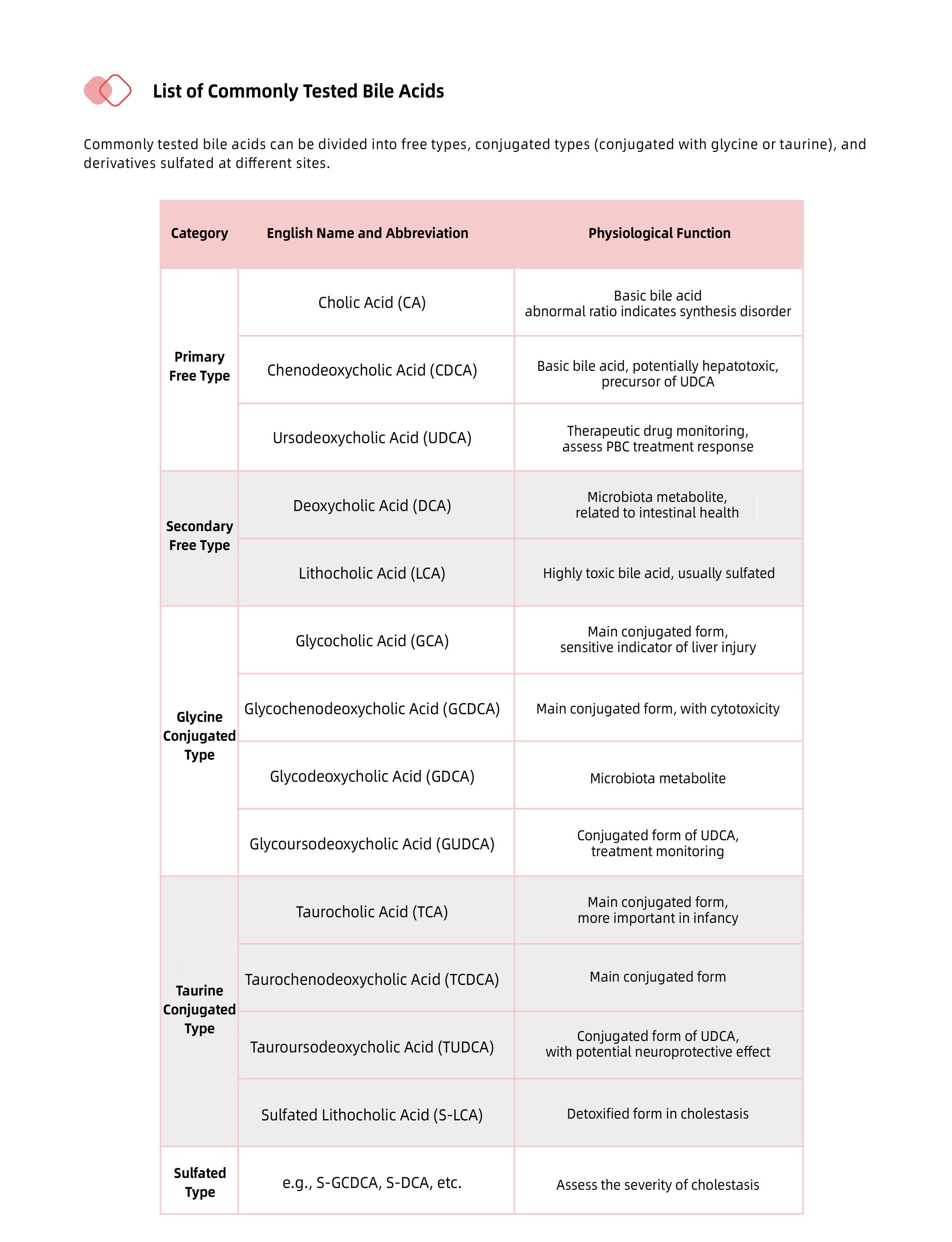
2、Monitoring of Treatment Response: For example, when ursodeoxycholic acid (UDCA) is used to treat primary biliary
cholangitis (PBC), it is necessary to assess whether a "biochemical response" is achieved to avoid ineffective treatment.
3、Need for Dose Optimization: For drugs such as obeticholic acid (OCA), the dose needs to be precisely controlled to avoid side
effects such as pruritus. Therapeutic Drug Monitoring (TDM) can realize individualized dose adjustment.
4、Disease Diagnosis and Classification: Specific bile acid profiles (such as the CDCA/CA ratio) are helpful for the diagnosis and
classification of rare diseases such as bile acid synthesis disorders.
Applicable Populations
1、Patients with Primary Biliary Cholangitis (PBC): Assessment of biochemical response after UDCA or OCA treatment.
2、Patients with Primary Sclerosing Cholangitis (PSC): Monitoring of disease progression and evaluation of new drug efficacy.
3、Patients with Cholestatic Liver Disease: Etiological differentiation and severity assessment.
4、Children with Congenital Bile Acid Synthesis Disorders: Diagnosis, classification, and monitoring of replacement therapy.
5、Patients with Non-Alcoholic Fatty Liver Disease (NAFLD)/Metabolic Syndrome: Assessment of the role of bile acid metabolic
disorders in the disease.
6、Those Undergoing Intestinal Surgery (e.g., Bariatric Surgery): Monitoring of changes in bile acid metabolism and its impact
on metabolism.