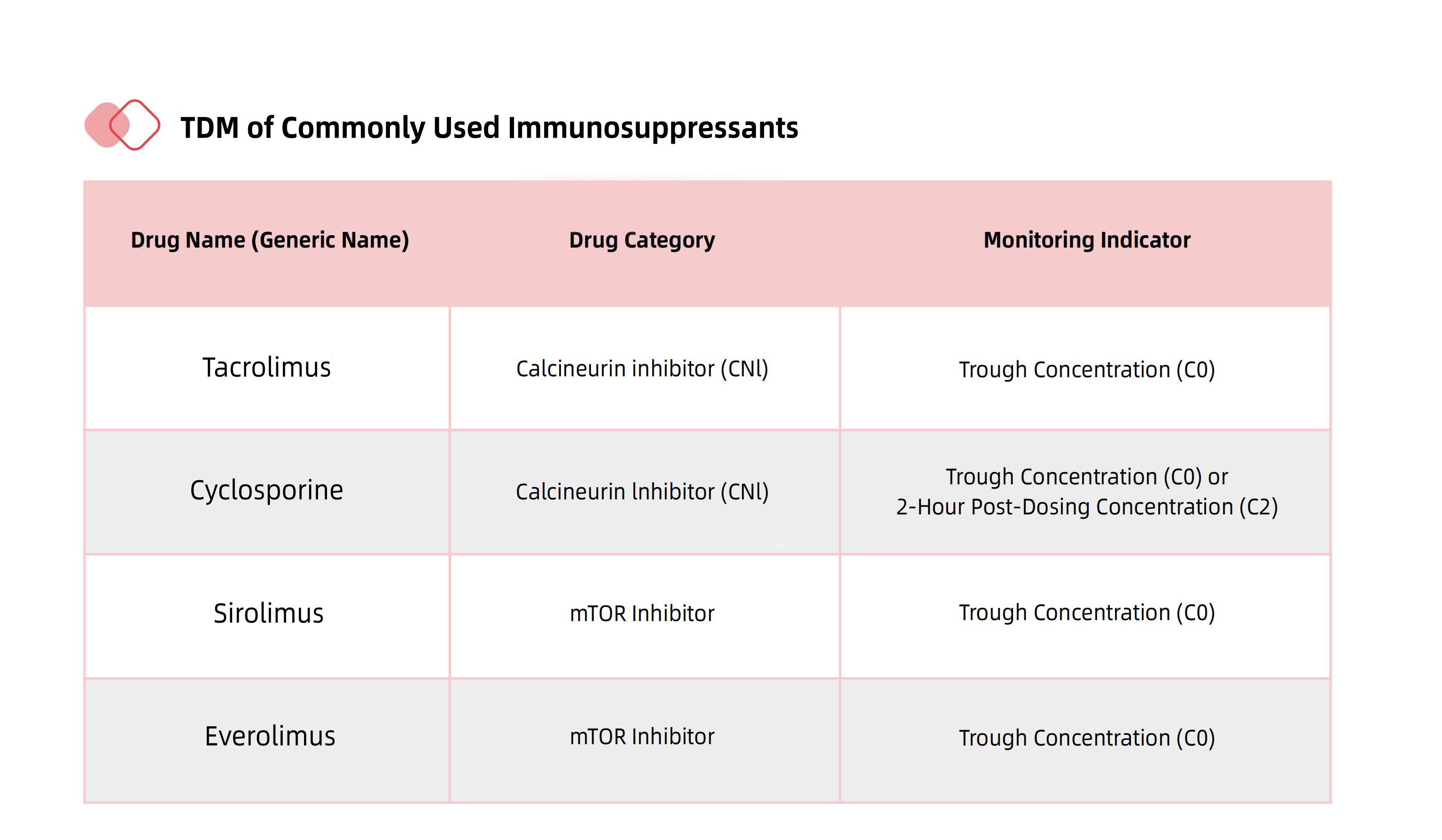
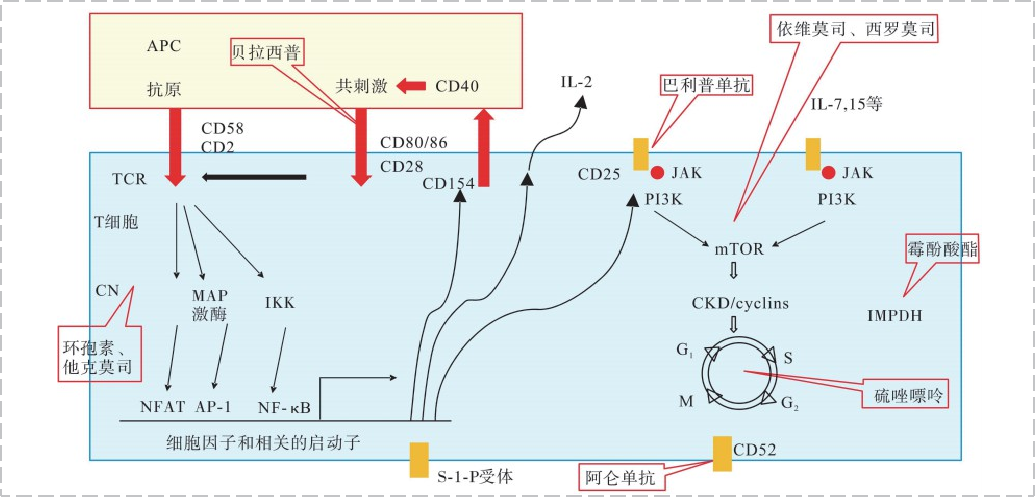
Reagent Kit Information
Detection Method: Liquid Chromatography-Tandem Mass Spectrometry (LC-MS/MS)
Reagent Kit Specifications: 96 tests/box, 192 tests/box
Product Advantages: Easy to operate, fast analysis speed, high throughput, meets clinical timeliness requirements, and stable method
Why is TDM Necessary for Immunosuppressants? (Necessity)
1、Narrow Therapeutic Window: The effective concentration range is very close to the toxic concentration range,
making dosage control difficult.
2、Significant Individual Differences: The absorption, distribution, metabolism, and excretion of drugs in the body are
affected by various factors,
resulting in differences in blood drug concentrations of more than 10 times among
different patients receiving the same dosage.
3、Clear Correlation Between Clinical Outcomes and Concentrations: Too low a concentration may lead to rejection and
loss of transplant organ function.
Too high a concentration is likely to cause serious toxic and side effects, such as
nephrotoxicity, neurotoxicity, bone marrow suppression, and opportunistic infections.
4.High Drug Costs: Optimizing dosages can avoid ineffective treatment and save medical costs overall.
Main Clinical Applications (Where to Use)
1、Organ Transplantation (The Most Classic Application)
Purpose: Prevent and treat transplant rejection.
Usage: A combination medication regimen (e.g., Tacrolimus + Mycophenolate Mofetil + Glucocorticoids) is
usually
adopted to achieve synergistic efficacy, reduce single-drug dosage and toxicity. Patients need to take medication for
life to maintain the immunosuppressed state.
2、Autoimmune Diseases
Purpose: Control the disease, relieve symptoms, and delay organ damage.
Common Diseases:
Rheumatic Diseases: Rheumatoid Arthritis, Systemic Lupus Erythematosus,
Ankylosing Spondylitis.
Skin Diseases: Psoriasis, Pemphigus.
Nervous System Diseases: Multiple Sclerosis.
Intestinal Diseases: Inflammatory Bowel Disease (Crohn's Disease, Ulcerative Colitis).
3、Severe Allergic Diseases
Purpose: For severe allergic diseases that are unresponsive to conventional treatment, short-term use of
immunosuppressants (especially glucocorticoids) can quickly control excessive immune responses.