Reagent Kit Information
Detection Method: Liquid Chromatography-Tandem Mass Spectrometry (LC-MS/MS)
Reagent Kit Specifications: 96 tests/kit, 192 tests/kit
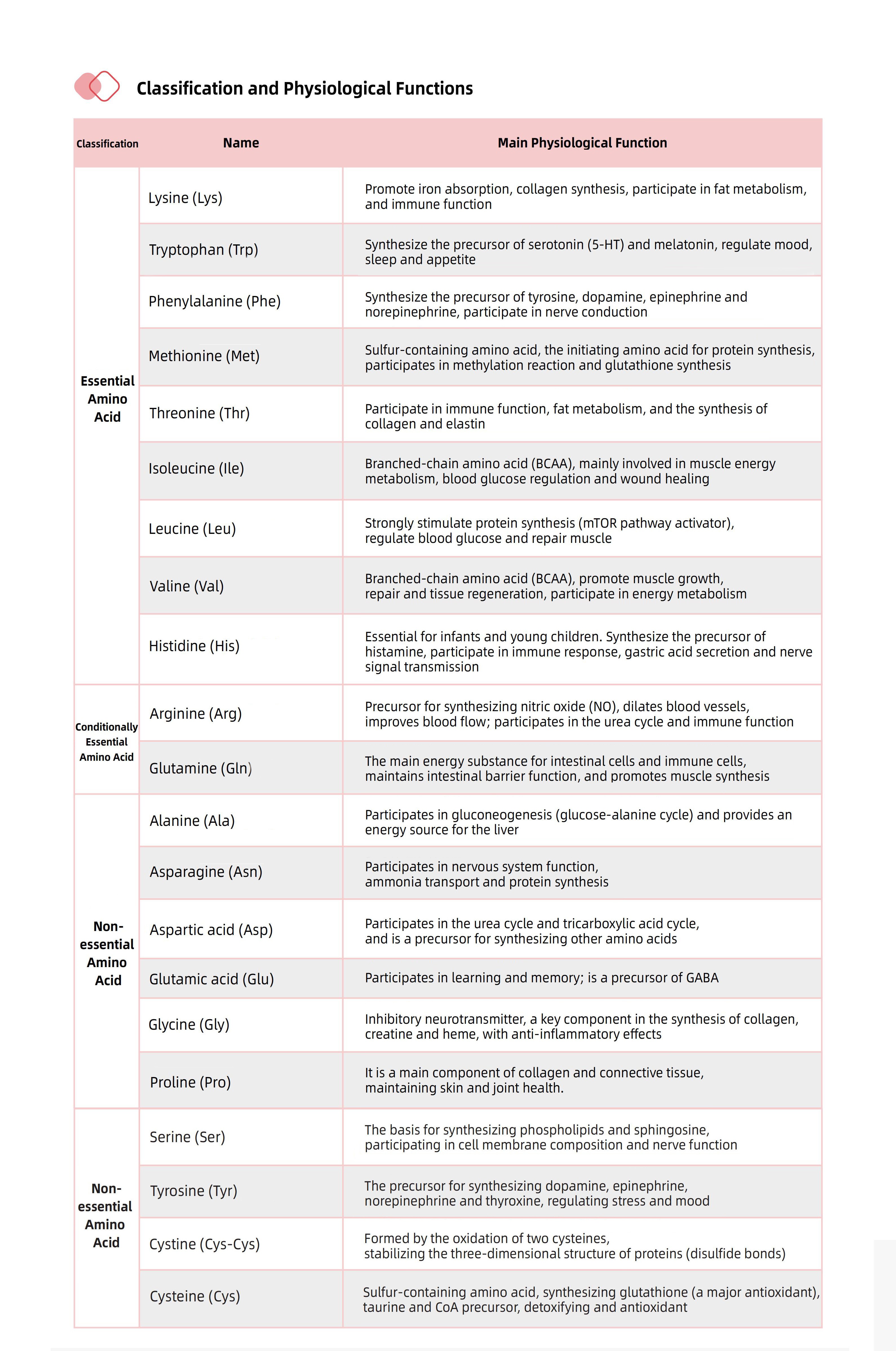
Product Advantages: Simple pretreatment, comprehensive determination of varieties, provision of a full set of
standard curve quality control, no need for on-site high-concentration dilution.
Clinical Significance
1、Significant Individual Differences: Different patients (in terms of age, body weight, liver and kidney function, metabolic
status) have remarkable differences in amino acid requirements and metabolic capacity. A "one-size-fits-all" formula may be
ineffective or even harmful.
2、Narrow Therapeutic Window: Excess of certain amino acids can cause toxicity (e.g., phenylalanine in phenylketonuria), while
deficiency fails to meet therapeutic needs (e.g., arginine for urea cycle disorders).
3、Difficulty in Efficacy Evaluation: The improvement of clinical symptoms is delayed, and blood drug concentration is a more
immediate and objective efficacy indicator.
4、Avoid Complications: Precise regulation can prevent complications such as metabolic acidosis, hyperammonemia, and liver
and kidney function damage.
Applicable Populations
1、Children with Inborn Errors of Metabolism (IEM): Such as phenylketonuria (PKU), maple syrup urine disease (MSUD),
tyrosinemia, urea cycle disorders, etc., who need lifelong monitoring and diet/drug management.
2、Critically Ill Patients and Surgical Patients: Patients on long-term parenteral nutrition (PN) support need to optimize amino
acid formulations to avoid overfeeding or undernutrition.
3、Patients with Impaired Liver or Kidney Function: Liver/kidney diseases lead to abnormal amino acid metabolism, requiring
special proportioning (e.g., branched-chain amino acids, BCAA).
4、Tumor Patients: In a hypermetabolic state, nutritional support regimens need precise adjustment.
Other Patients: Such as those in a hypermetabolic state due to severe trauma, burns, sepsis, etc.